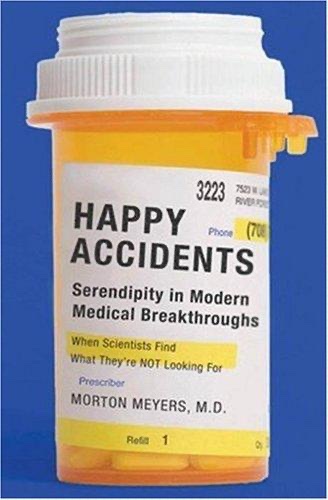
Cover of Happy Accidents

Happy Accidents

Morton A. Meyers, M.D.

4 ideas

  1. Major Discoveries Come From Unplanned Observation

    Most transformative medical breakthroughs were not the product of hypothesis-driven research but of accidents noticed by prepared minds during work aimed at something else entirely. The discovery emerges when a researcher treats an anomaly as a signal rather than dismissing it as contamination or error.

  2. Penicillin From A Contaminated Petri Dish

    Alexander Fleming returned from vacation to find a mold had contaminated his bacterial culture and killed the surrounding bacteria, an observation most would have discarded as a ruined experiment. By pausing to ask why the contamination destroyed the colonies, he identified penicillin and opened the antibiotic era.

  3. The Prepared Mind Captures Chance

    Accidents only become discoveries when they land on someone whose training and curiosity let them recognize significance in the unexpected. The same anomaly that one observer ignores as noise becomes another observer's breakthrough because of accumulated expertise and an alertness to deviation.

  4. Funding Structures Suppress Serendipitous Discovery

    Grant systems that demand predefined hypotheses and predictable outcomes penalize the open-ended, exploratory work where accidental breakthroughs actually occur. By rewarding only incremental, proposal-bound research, institutions structurally reduce the conditions under which transformative chance discoveries can happen.

Save and mark ideas in the app