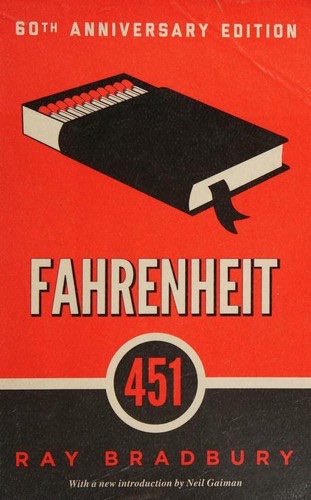
Cover of Fahrenheit 451

Fahrenheit 451

Ray Bradbury

7 ideas

  1. Speed and Saturation as Tools of Pacification

    Filling every waking moment with fast, loud, immersive sensory media leaves no gap in which a person can reflect, question, or feel discontent. Distraction works not by hiding truth but by eliminating the silence and slowness required to think at all.

  2. Books as Containers of Lived Texture

    The value of literature lies not in the physical books but in the dense, pore-filled detail of real experience they preserve — the specific, uncomfortable record of how life actually feels. What threatens authority is not paper but texture: the showing of flaws, contradictions, and unresolved depth that flat entertainment deliberately omits.

  3. The Woman Who Burns With Her Books

    A woman refuses to leave her house as the firemen prepare to burn her library, choosing to strike the match and die in the flames rather than live without her books. Her conviction shatters Montag's indifference, because a thing someone will die for must contain a value he had never imagined existed.

  4. Immersive distraction as manufactured unhappiness

    Mildred lives inside three walls of interactive screens and seashell earbuds, and calls the screen characters her 'family'. She is constantly stimulated yet suicidally empty. Bradbury's point is that immersive entertainment does not deliver happiness. It crowds out the silence, conversation, and reflection that would let people notice they are unhappy, so their despair goes unexamined.

  5. Montag's awakening from fireman to book-keeper

    Guy Montag is a fireman whose job is to burn books. His wife Mildred is numbed by her wall-screen 'family' and survives an overdose she doesn't remember. She reports him. He kills Captain Beatty with his flamethrower, flees the city, and joins a group of exiles who each memorize a book, just before war destroys the city.

  6. Censorship began as popular demand, not decree

    Captain Beatty explains that book-burning was not imposed by a tyrant. The public abandoned books first, because mass media, shrinking attention spans, and the wish to avoid offending any minority made difficult text unwelcome. The state then formalized what consumers had already chosen, so the censor arrives last, ratifying a preference for comfort over thought.

  7. Human memory as last-resort archive

    Knowledge that cannot survive on paper can survive in minds and oral transmission. This makes preservation a personal discipline rather than an institutional function.

Save and mark ideas in the app