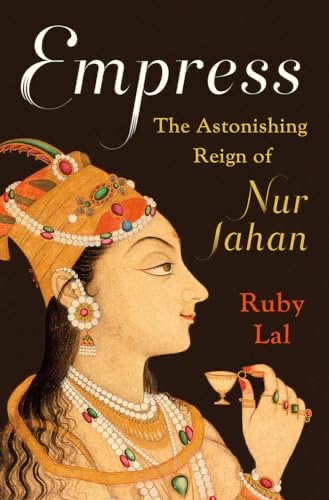
Cover of Empress: The Astonishing Reign of Nur Jahan

Empress: The Astonishing Reign of Nur Jahan

Ruby Lal

7 ideas

  1. Co-Sovereignty Hidden in Plain Sight

    Nur Jahan exercised genuine sovereign power — issuing imperial orders, signing edicts, and controlling trade — not as a manipulator behind the throne but as an openly recognized co-ruler. The fiction that powerful women only operated through 'influence' obscures cases where authority was formally exercised and publicly acknowledged.

  2. Coinage as Claim to Authority

    Having coins minted in her own name was the clearest assertion of Nur Jahan's sovereign status, because the right to issue currency was a defining prerogative of a ruler. Material instruments of statecraft — money, seals, edicts — convert informal power into legible, institutional authority that cannot be dismissed as mere personal sway.

  3. Tiger Hunt From the Elephant Howdah

    Nur Jahan reportedly killed four tigers with six shots from atop an elephant, a feat celebrated at court and recorded as evidence of her exceptional skill. The episode functioned as public proof that she possessed the martial competence and courage conventionally reserved for male sovereigns.

  4. Reading Silence in the Archive

    When official chronicles diminish or omit a woman's actions, the gaps themselves become evidence — anxiety, erasure, and selective praise reveal the threat she posed to gendered expectations. Reconstructing a suppressed figure requires reading court records, paintings, and architecture against their intended message rather than at face value.

  5. Nur Jahan's rescue of the captured Jahangir

    In 1626, the general Mahabat Khan seized Emperor Jahangir in a camp coup near the Jhelum River. Nur Jahan evaded capture and led an armed charge from elephant-back across the river, which failed under heavy losses. She then surrendered herself to join Jahangir and, working from inside captivity, helped engineer his escape within months: evidence that a Mughal empress could act as military commander and strategist, not just a patron.

  6. Reading past the schemer-queen historiography

    Later Mughal chroniclers and colonial historians recast Nur Jahan's openly exercised power as seduction, manipulation of a drunken husband, or a romantic love story, because female rule did not fit their categories. Recovering her requires reading their sources against the grain. That means treating her coins, decrees, buildings and hunts as primary evidence of intentional statecraft, and treating the 'power behind the throne' framing as an artifact of the narrators.

  7. The harem as political institution

    The Mughal haram was not a sealed zone of seclusion. It was a structured household where royal women held rank, controlled wealth, commissioned architecture and brokered alliances. Nur Jahan used this base, along with her kin network (her father Itimad-ud-Daula as minister, her brother Asaf Khan in high office), to turn domestic position into state power.

Save and mark ideas in the app