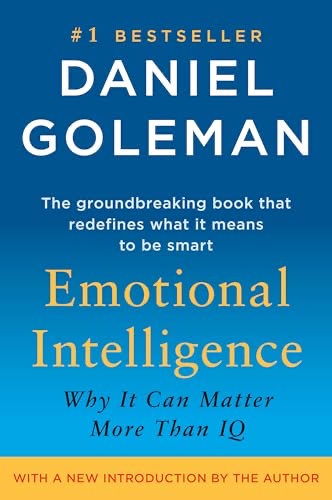
Cover of Emotional Intelligence

Emotional Intelligence

Daniel Goleman

6 ideas

  1. The amygdala hijack

    Goleman popularizes how the amygdala can trigger an emotional reaction before the neocortex evaluates it. This fast, sometimes disproportionate response explains why people act on feeling before thought and why regulation matters.

  2. EQ can outweigh IQ

    He argues that emotional competencies predict success in work and relationships beyond what cognitive intelligence explains. IQ may set a threshold, but self-awareness and empathy govern outcomes above it.

  3. Five domains of emotional intelligence

    Goleman organizes EQ into self-awareness, self-regulation, motivation, empathy, and social skill. The scheme turns a vague trait into trainable components that can be assessed and developed.

  4. Delayed gratification predicts outcomes

    Citing the marshmallow experiments, he frames impulse control as a foundational emotional skill. Children who could wait showed better later outcomes, illustrating self-regulation's long payoff.

  5. Empathy as social intelligence

    Reading others' emotional states, Goleman argues, is the substrate of leadership, teamwork, and intimacy. Emotions are contagious, so managing the group's affective climate is a practical skill.

  6. Emotional skills can be taught

    Goleman argues that emotional competence is not fixed but can be cultivated, especially in childhood. This grounds his case for emotional education in schools and workplaces rather than treating EQ as innate.

Save and mark ideas in the app