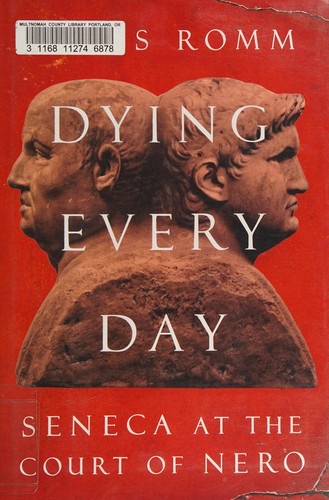
Cover of Dying Every Day: Seneca at the Court of Nero

Dying Every Day: Seneca at the Court of Nero

James Romm

4 ideas

  1. Proximity to power corrupts the philosopher's freedom

    A moral teacher who accepts wealth and position from a tyrant becomes complicit in that tyrant's crimes, regardless of his private virtue. The closer one stands to absolute power, the more one's principles get spent buying influence one cannot actually use to restrain the ruler.

  2. Rehearsing death as daily discipline

    Treating each day as a small death — accepting that life is constantly being subtracted and that any moment could be the last — is a practice meant to drain death of its terror and free a person to act with detachment. The aim is to hold life loosely enough that no threat can be used as leverage against you.

  3. Reading philosophy against biography

    A thinker's written ideals can be cross-examined against the documented choices of his life, exposing the gap between counsel given and conduct lived. Where the writings preach contempt for riches and the life accumulates a fortune, the contradiction itself becomes data about how ideals function under pressure.

  4. Seneca's prolonged forced suicide

    Ordered by Nero to die, Seneca opened his veins but his aged, frail body bled too slowly, forcing him to take poison and finally a hot bath to hasten death — turning the dignified Stoic exit into a drawn-out ordeal. The episode shows the distance between the philosophical script for noble death and the messy physical reality of dying.

Save and mark ideas in the app