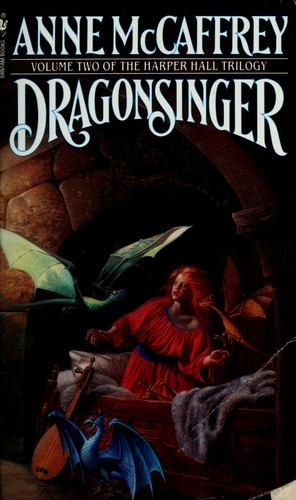
Cover of Dragonsinger

Dragonsinger

Anne McCaffrey

5 ideas

  1. Competence undermined by chronic role ambiguity

    A newcomer with genuine talent can be paralyzed not by lack of skill but by never being told where they belong, what is expected, or what privileges they hold. The absence of explicit role definition forces them to read every interaction as a test, draining energy that could go toward the work itself.

  2. Earned belonging through demonstrated output

    Status among skeptics shifts only when the outsider produces work that cannot be dismissed — a composition, a repair, a performance — rather than through claims about their credentials or affiliations. Tangible artifacts convert social doubt into grudging acceptance more reliably than reputation or sponsorship.

  3. Teaching by withholding versus scaffolding

    An expert can develop a protégé either by setting tasks slightly beyond current ability and stepping back, or by overwhelming them with simultaneous demands and letting failure instruct. The first builds confidence incrementally; the second tests resilience but risks crushing the learner before mastery forms.

  4. Bonded companions as emotional regulators

    A creature whose moods are continuously perceptible and whose loyalty is unconditional functions as an external anchor that stabilizes a person under social stress. Reading one's own state through the companion's reactions provides a feedback loop that keeps fear and self-doubt from spiraling.

  5. Menolly's first week at the Harper Hall

    Menolly, a fisher-hold girl from Half-Circle Sea Hold whose father had forbidden her music, is brought by Masterharper Robinton to the Harper Hall at Fort Hold on Pern. She arrives with nine fire lizards and becomes one of the Hall's first female apprentices. In her first week, jealous pupils such as Pona harass her and some masters doubt her, but her compositions, her teachers' respect and a concert performance win her a place as a true harper apprentice.

Save and mark ideas in the app