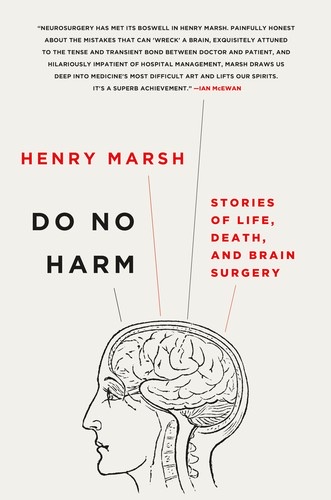
Cover of Do No Harm

Do No Harm

Henry Marsh

6 ideas

  1. Operating on the brain risks the self

    Neurosurgery is unique because the organ being cut is the seat of personality, memory, and consciousness — a millimeter's error can leave a patient physically alive but cognitively destroyed. The surgeon is therefore not just repairing tissue but gambling with the patient's identity.

  2. Smuggling Neurosurgery Into Post-Soviet Kiev

    Beginning in the early 1990s, Henry Marsh travelled repeatedly to Kiev, Ukraine, working with local neurosurgeon Igor Kurilets and bringing donated equipment into a health system where modern neurosurgery was scarce. There Marsh took on patients with advanced brain tumours that local surgeons considered inoperable. Some of those cases ended in disabling or fatal outcomes, and the work exposed him to local obstruction and hostility.

  3. The hardest skill is knowing when not to operate

    Technical skill matters less than judgment about whether an operation should happen at all. For benign or slow-growing tumors, and for elderly or fragile patients, an operation can leave someone alive but catastrophically disabled, which is worse than leaving the condition alone. The surgeon must weigh this against the pull of hope, the family's pressure, and his own wish to act, because doing nothing can be the correct and harder choice.

  4. Every surgeon carries a private cemetery

    Marsh adopts the French surgeon René Leriche's line that every surgeon carries within him a small cemetery, where he goes to pray from time to time. Because surgical errors are inevitable and permanent, the ethical response is not to deny them. It is to remember them, admit them openly to patients and colleagues, and let them discipline future judgment, since hiding mistakes destroys the only way to learn from them.

  5. Detachment and compassion as competing necessities

    A surgeon has to be detached enough to cut into a brain without being paralyzed by fear. He also has to stay compassionate enough to see the frightened person the brain belongs to. Too much detachment turns patients into cases and breeds arrogance; too much identification makes the work unbearable. Marsh presents surgical character as a constant, uncomfortable balance between the two, never a settled resolution.

  6. Surgeon's infant son's brain tumor

    Early in his career, Marsh's baby son William was diagnosed with a brain tumor and operated on successfully by a neurosurgeon at Great Ormond Street Hospital. It also gave him lasting first-hand knowledge of the fear and dependence patients' families feel, a view that surgeons who have only held the knife usually lack.

Save and mark ideas in the app