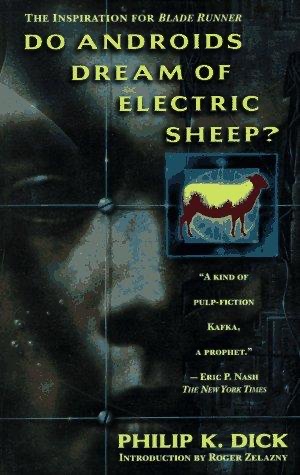
Cover of Do Androids Dream of Electric Sheep?

Do Androids Dream of Electric Sheep?

Philip K. Dick

7 ideas

  1. Empathy As The Line Between Human And Machine

    The boundary between authentic humanity and artificial simulation is defined not by intelligence or appearance but by the capacity for empathy — the ability to feel another's suffering as one's own. Androids fail this test because empathy, requiring genuine vulnerability to the fate of others, cannot be replicated by a being optimized for self-preservation.

  2. The Empathy Test As Behavioral Detection

    When an internal trait is undetectable by inspection, you can identify it through involuntary physiological responses to morally charged stimuli that the trait would naturally produce. The Voigt-Kampff test catches androids by measuring micro-delays in the autonomic blush and eye reflex when subjects hear scenarios of cruelty that a genuine empath would respond to instantly.

  3. Rick Deckard's One-Day Hunt for Nexus-6s

    In post-war San Francisco, bounty hunter Rick Deckard takes over the assignment to 'retire' six escaped Nexus-6 androids, after the Rosen Association's Rachael Rosen, an android raised to believe she was human, nearly passes his Voigt-Kampff test. In a single day he kills the remaining fugitives, including Roy and Irmgard Baty and Pris Stratton, whom the 'chickenhead' J.R. Isidore has sheltered in his decaying apartment building after watching Pris calmly snip the legs off a spider.

  4. Mercerism: shared suffering technology as religion

    Through the empathy box, users merge with Wilbur Mercer's endless climb while being stoned and feel one another's pain collectively. Mercerism grounds human identity in engineered co-suffering. When Buster Friendly exposes Mercer as a staged fake on a soundstage, the experience still keeps its meaning for believers. The lens: a ritual can hold a community together even when it is shown to be fabricated, because its value lies in the participation rather than in whether its origin is true.

  5. Deckard tests Rachael Rosen at Rosen

    Sent to validate the Voigt-Kampff empathy test against the new Nexus-6 brain, Deckard is first told by the Rosen Association that Rachael is human and that the test has wrongly flagged her. That would force police to recall the test. Only a slip in her answers reveals she is an android who did not know it herself. This shows that the manufacturer of the thing being measured can pressure and manipulate the measuring instrument.

  6. Animal ownership as a status display

    After the war killed most animals, owning a living creature became both a moral duty and the main status symbol. People who cannot afford a real one keep electric animals and hide that they are fake. Care for other creatures becomes a way to show empathy to the neighbors, so outward virtue drifts away from the actual relationship it was meant to express. Deckard's electric sheep and his debt-financed goat embody this.

  7. Empathy tests measure performance, not inner capacity

    The Voigt-Kampff test defines humanity as an involuntary physiological reaction, such as blush or pupil response, to scenarios of animal suffering. Some androids nearly pass it. Meanwhile the novel's humans, including bounty hunter Phil Resch, kill without remorse and are cruel to one another, so the line the test draws does not track the moral quality it claims to measure.

Save and mark ideas in the app