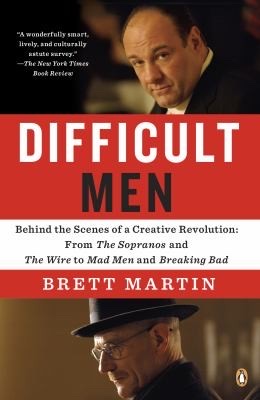
Cover of Difficult Men

Difficult Men

Brett Martin

5 ideas

  1. The Showrunner as Singular Authorial Voice

    Television escaped its committee-driven mediocrity when a single creative figure was granted both authorial control and managerial command over the entire production. This dual role — part writer, part CEO — allowed an uncompromising personal vision to survive contact with the industrial machine of weekly production.

  2. Morally Compromised Protagonists Enable Serial Depth

    The era's defining dramas centered on antiheroes whose unresolved moral contradictions could not be settled in a single episode, forcing the narrative to extend and deepen across seasons. Audiences stayed engaged not despite the protagonists' repellent behavior but because the tension between sympathy and judgment was never released.

  3. Abusive Genius as Cultural Permission

    The same intensity and refusal-to-compromise that produced groundbreaking work also licensed cruelty, tyranny, and dysfunction in the workplace, with surrounding institutions treating the abuse as the acceptable cost of brilliance. Viewing creative achievement through this lens reveals that the celebrated 'difficult man' was often shielded precisely because his output justified the damage.

  4. Technological Shift Precedes Creative Revolution

    Premium cable's subscription model removed the constraints of advertiser approval and ratings-by-the-episode, creating an economic space where risk-taking and slow-building complexity became financially rational. The artistic flowering followed structurally from the business-model change rather than arriving as a spontaneous burst of talent.

  5. David Chase Brings The Sopranos to HBO

    David Chase was a veteran network writer who openly despised television. He took his idea about a New Jersey mob boss in therapy, drawn partly from his own fraught relationship with his mother, first to Fox, which passed. HBO then picked it up, and when The Sopranos premiered in January 1999, James Gandolfini's Tony Soprano became the template for the era; Chase fought HBO executives over pacing, violence and ambiguity, and ended the series in June 2007 with an abrupt cut to black in a diner.

Save and mark ideas in the app