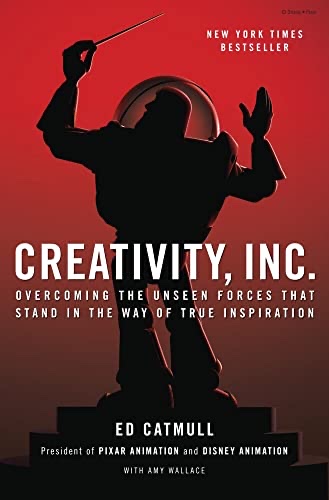
Cover of Creativity, Inc.

Creativity, Inc.

Ed Catmull, Amy Wallace

7 ideas

  1. People Matter More Than Ideas

    Give a good idea to a mediocre team and they will ruin it; give a mediocre idea to a great team and they will either fix it or discard it for something better. Therefore leaders should invest in building and protecting excellent, well-functioning teams rather than guarding ideas.

  2. Pixar's Toy Story 2 Emergency Rebuild

    In 1998–99 Pixar's Toy Story 2, begun as a direct-to-video sequel and handed to a less experienced team, was judged by John Lasseter and Pixar's leadership to be hollow and mediocre, just months before its fixed release date. Rather than ship it, Catmull's Pixar had Lasseter's senior team take over and rework much of the story in about nine months. The result was a critical and commercial hit, but the crunch left many staff with repetitive strain injuries and one exhausted animator forgot his baby in a hot car; the baby survived, and Pixar concluded that every film must meet one quality standard and that such crunches could not be repeated.
  3. Ugly Babies: protecting fragile early ideas

    Early versions of every Pixar film are awkward, incomplete, and unappealing, which Catmull calls 'ugly babies.' Judged against finished work, they would always be killed. Management's job is to shield these nascent ideas from the organization's hunger for proven, efficient output long enough for them to grow into something good.

  4. All Pixar films suck at first

    Catmull asserts that every Pixar film was broken in its early reels and often well into production, including Toy Story 2, which was rebuilt nearly from scratch months before release. Quality is not a property of the initial idea but the product of many rounds of honest diagnosis and revision. A studio should therefore invest in the process that fixes broken films, not in finding ideas that start out good.

  5. Braintrust: candor without authority to mandate

    Pixar's Braintrust is a group of experienced filmmakers who watch a director's work-in-progress and give blunt, specific notes. The notes carry no power: the director alone decides what to do with them. Stripping the feedback-givers of authority is what makes the candor safe to give and possible to hear, because the director doesn't have to defend the film against a boss.

  6. The Hidden: unseen problems in organizations

    Leaders see only a small fraction of what happens in their organization, and their success makes them more confident they see it all. Problems stay hidden because of hierarchy, fear, and people's reluctance to bring bad news upward. Catmull argues managers must assume their view is incomplete and deliberately build channels, like Notes Day, that bring hidden issues to the surface.

  7. Failure as the cost of originality

    Mistakes are an unavoidable byproduct of doing something new, not evidence of incompetence. If an organization punishes failure, people retreat to safe, derivative work and hide their errors, which makes the errors more expensive. The goal is to make failing early and cheaply normal while still holding people responsible for learning from it.

Save and mark ideas in the app