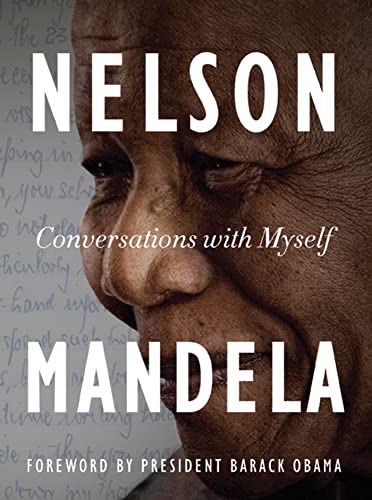
Cover of Conversations with Myself

Conversations with Myself

Nelson Mandela

8 ideas

  1. Deliberate self-discipline as the inner prison

    Long imprisonment is survived not by hope alone but by imposing rigid daily structure on the body and mind — exercise, study, and routine convert powerlessness into controlled agency. The cell you cannot leave is endured by mastering the one domain still under your authority: your own conduct and schedule.

  2. Negotiate from strength, never from desperation

    Initiating talks with an adversary should be done from a position of moral and strategic strength, not weakness, and timing matters more than terms — a leader may open negotiations secretly and alone, ahead of his own followers, accepting the risk of being called a sellout. Premature negotiation signals defeat; well-timed negotiation reframes the negotiator as the one setting conditions.

  3. Performed leadership versus private doubt

    A public leader deliberately projects certainty, calm, and conviction while privately harboring fear, loneliness, and uncertainty — the persona is a tool constructed for others' morale, not a true report of inner state. The gap between the performed self and the felt self is managed consciously rather than resolved.

  4. Reconciliation as strategic disarmament of fear

    Extending dignity and forgiveness to former oppressors is treated as a calculated political instrument, not merely a moral gift — by removing the enemy's fear of retribution, you dissolve their reason to resist transition. Magnanimity becomes a mechanism for converting a cornered opponent into a stakeholder.

  5. Refusing the jailer control of your temper

    A captor's real leverage is not the walls but the ability to provoke a reaction, because an outburst hands the other side both a pretext and control of your inner state. By deciding in advance not to let a warder's insult set his emotional response, the prisoner keeps the one form of sovereignty that cannot be taken. Staying calm is a deliberate way to keep power, not submission.

  6. A saint is a sinner who keeps trying

    Mandela rejects the image of himself as a saint and says the private record should show a flawed man. He redefines virtue as persistent effort at self-correction rather than a fixed moral condition. On this view, the public icon is misleading unless it includes the repeated private work of noticing and fixing one's failures.

  7. The cell as a self-audit instrument

    Confinement removes the external noise that normally lets a person avoid inspecting themselves, so it can be used as a daily review of one's own conduct. Mandela's advice from prison is to look each day at what you have actually done, suppress the bad and develop the good. He treats the inner qualities of honesty, humility, simplicity and absence of vanity as the real foundation of a person, more lasting than position, wealth or education.

  8. Writing under a censor's eye

    Every letter Mandela wrote in prison had two readers: the loved one it was addressed to and the official who would decide whether it was delivered. Seeing his letters this way shows how constrained communication becomes a craft of indirection, where warmth, politics and instruction are coded so they survive the gatekeeper. The finished text records both what he meant and what he calculated would get through.

Save and mark ideas in the app