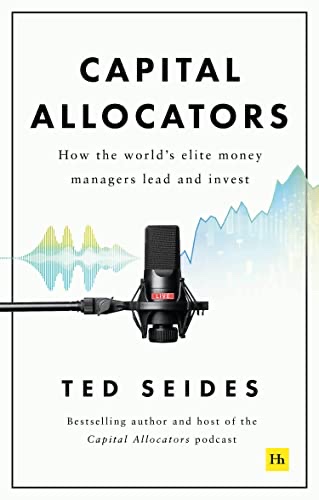
Cover of Capital Allocators

Capital Allocators

Ted Seides

6 ideas

  1. The allocator's job is a process, not stock-picking

    Seides distills how chief investment officers of endowments and pensions build governance, set strategy, and select managers rather than pick securities. The craft is designing a decision process that compounds over decades.

  2. Manager selection and the interview edge

    A recurring lesson is that judging investment managers is largely about assessing people, process, and alignment, not just past returns. Great allocators develop pattern recognition for character and repeatability.

  3. Governance and behavior as hidden alpha

    The book argues most returns are won or lost through governance structures and behavioral discipline, avoiding forced selling and career-driven decisions. Managing the committee and oneself matters more than clever bets.

  4. Hiring and firing as buy-high-sell-low

    Institutions tend to hire managers after strong runs and fire them after weak ones, which repeats the performance-chasing they criticize in individual investors. Fired managers often go on to outperform the replacements hired in their place. Firing decisions should therefore ask whether the original investment thesis about the manager has broken, not whether recent returns have disappointed.

  5. Diligence people and incentives, not strategy

    Because strategies can be copied and returns are noisy, allocators weigh the durable inputs most heavily. These are the character and integrity of the principals, firm culture and succession, and alignment of interests through fee structure, personal capital invested and capacity discipline. Diligence gathers these through repeated interactions and back-channel references over time, not a single pitch meeting.

  6. Track records cannot distinguish skill from luck

    A three-to-five-year track record is too short and noisy to separate skill from luck, so allocators who hire mainly on past returns are mostly buying randomness. Selection therefore rests on qualitative judgment: whether the manager can clearly state a repeatable edge, and whether the team, process and incentives would plausibly produce that edge again.

Save and mark ideas in the app