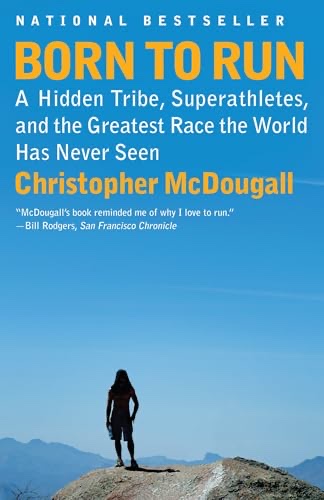
Cover of Born to Run

Born to Run

Christopher McDougall

6 ideas

  1. Humans Evolved as Persistence Hunters

    Early humans outran prey not through speed but through endurance and superior heat dissipation — sweating instead of panting, running animals into hyperthermic collapse over hours. Our anatomy (springy Achilles tendons, large gluteus muscles, sweat glands, hairless skin) is specifically engineered for long-distance running, suggesting endurance running shaped human evolution rather than being incidental to it.

  2. Cushioned Shoes Cause Running Injuries

    Modern padded running shoes disable the foot's natural shock-sensing feedback, encouraging a heel-strike landing that sends impact forces up through the leg. Barefoot or minimally-shod runners land on the forefoot and instinctively run lighter, because pain feedback forces a gentler gait — making protective shoes counterproductive to long-term joint health.

  3. The Tarahumara Run Without Injury

    The Tarahumara of Mexico's Copper Canyons run hundreds of miles in thin sandals well into old age, free of the joint injuries that plague Western runners. Their kicked-ball races spanning days demonstrate that effortless long-distance running is a recoverable human capacity, not an elite anomaly.

  4. Run With Joy Not Force

    Sustainable endurance comes from running with ease, relaxation, and emotional lightness rather than gritted aggression — the body performs best when running feels playful rather than punishing. Treating running as a source of pleasure, not a battle against the body, is what allows it to be maintained over a lifetime.

  5. The 2006 Copper Canyon Ultramarathon

    In 2006, Micah True ('Caballo Blanco'), an American who lived among the Rarámuri, organised a roughly 50-mile race through Mexico's Copper Canyon from Urique. It pitted Rarámuri runners, running in huarache sandals, against American ultrarunners including Scott Jurek and Jenn Shelton.

  6. The unspoiled people as Western projection

    The Rarámuri are cast as joyful, uncorrupted runners who have kept something modern Westerners lost. That makes them a mirror for the author's own dissatisfactions rather than people with their own history. This framing plays down poverty, displacement, cartel violence and internal complexity so that the group can serve as proof that a purer way of living and moving still exists. The book's appeal depends partly on satisfying this hunger for a people who have not lost something.

Save and mark ideas in the app