Three intertwined races
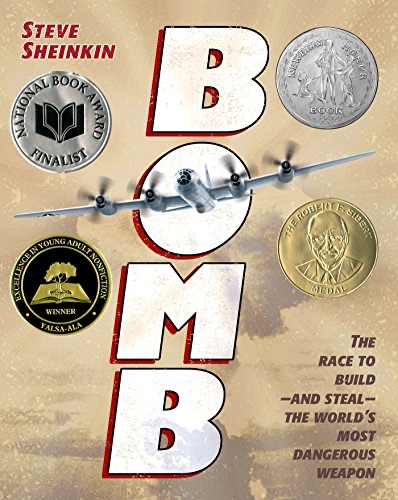
Sheinkin braids the American race to build the bomb, the Soviet effort to steal it, and Allied sabotage of the German program. The three storylines interlock into a single espionage-thriller history.
6 ideas
Sheinkin braids the American race to build the bomb, the Soviet effort to steal it, and Allied sabotage of the German program. The three storylines interlock into a single espionage-thriller history.
The book shows how spies like Harry Gold and Klaus Fuchs passed Manhattan Project secrets to the USSR. Stolen designs compressed the Soviet timeline, treating espionage as a channel for transferring technology.
The book closes on the enduring dilemma that building the weapon left humanity permanently capable of self-destruction. The technical achievement is inseparable from an unresolved moral burden.
After Hahn and Strassmann split uranium in December 1938 and Meitner and Frisch explained it as fission, physicists worldwide grasped within weeks that a chain reaction and a bomb were possible. From then on, the race turned on industrial scale, materials, and engineering, which is why heavy water, uranium enrichment, and plutonium production became the real battlegrounds.
General Groves ran the Manhattan Project on strict need-to-know secrecy, yet Klaus Fuchs, Ted Hall, and David Greenglass passed bomb designs to the Soviet Union from inside Los Alamos. They acted from conviction, not for money. The leaks shortened the Soviet timeline by an estimated one to two years.
In February 1943, a small team of British-trained Norwegian commandos skied across the frozen Hardanger Plateau, climbed down a gorge, and entered the German-occupied Vemork hydroelectric plant. There they blew up the heavy-water concentration cells that Germany needed for its nuclear reactor research. After production resumed, resistance fighters sank the ferry Hydro in February 1944 while it carried the remaining heavy water to Germany. This effectively ended the Nazi path to a working reactor.