Race is invented to justify plunder
Coates argues that racial categories were constructed to rationalize theft of labor and land. Race is a product of racism, not its cause.
8 ideas
Coates argues that racial categories were constructed to rationalize theft of labor and land. Race is a product of racism, not its cause.
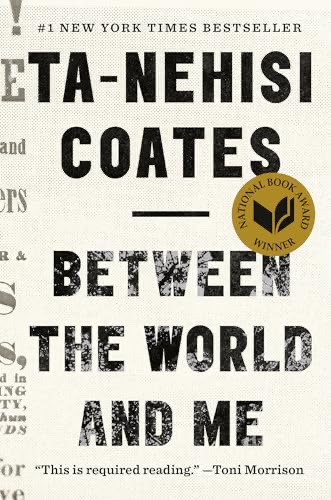
Framed as a letter to his teenage son, the book passes on hard truth rather than false comfort. The epistolary form makes the political intimately personal.
In September 2000, Prince Jones, Coates's gentle, well-off friend from Howard University, was followed by an undercover Prince George's County police officer through Maryland and Washington, D.C., into Fairfax County, Virginia, and shot dead in his Jeep near his fiancée's home. The officer, himself Black, had mistaken him for a suspect and was never charged. Coates later visits Jones's mother, Dr. Mabel Jones, who had risen from poverty to become a radiologist, to show that no education, wealth, or respectability had been able to protect her son's body.
Coates refuses the belief that history bends toward justice or that suffering is redemptive. He tells his son he must struggle anyway, for its own sake and for his ancestors' memory, not because victory is promised. Meaning comes from the act of resistance and honest perception, not from a guaranteed outcome.
Coates presents Howard University, 'the Mecca,' as the place where the sheer variety of Black people exposed any single heroic narrative as false. There, education meant working through contradictions in history and the library, not receiving answers. The value was in making himself uncomfortable, becoming a questioner and not a believer in any Dream, including Black nationalist ones.
Coates reframes racism away from abstractions like 'race relations' or 'institutional bias' and toward the concrete destruction of flesh: 'it is heritage.' The mechanism is disembodiment, the taking of the brain, spine, teeth, and labor of a specific person. Euphemistic language is itself a tool that lets a society avoid seeing that violence.
The American 'Dream' is a suburban idyll of innocence, lawns, and Memorial Day cookouts that depends on plunder of Black bodies while refusing to see it. The people living inside it are 'those who believe they are white,' because whiteness is not a biological fact but a political identity invented to justify that plunder. The Dream's comfort requires forgetting the violence that funds it.
For a Black boy in Baltimore, the streets demanded constant fear-driven vigilance, and schools demanded obedience that had nothing to do with curiosity. Both institutions punished the body: one with violence, one with suspension and the pipeline toward prison. Failing at either was treated as individual moral failure rather than the predictable output of the system.