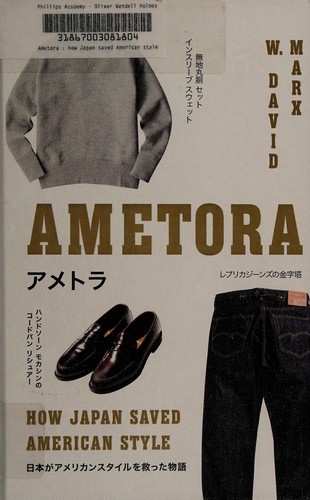
Cover of Ametora: How Japan Saved American Style

Ametora: How Japan Saved American Style

W. David Marx

4 ideas

  1. Faithful Copying Preserves What Originators Discard

    When a culture imports a foreign style, its outsider obsession with authenticity leads it to document and replicate details that the originating culture treats as too mundane to record. Japan archived and reproduced mid-century American clothing construction so precisely that, decades later, it became the authoritative reference for American brands that had abandoned their own heritage.

  2. Ivy Style Smuggled Through 'Take Ivy'

    In 1965, Japanese entrepreneurs photographed Ivy League campus dress in a book called 'Take Ivy' and built the VAN brand to sell the look to youth, despite older Japanese authorities seeing the casual clothing as delinquent. The state initially treated these well-dressed teenagers as social threats, only for the same style to later become respectable mainstream fashion.

  3. Rulebook Codification of Tacit Style

    Styles that natives wear by intuition can be reverse-engineered into explicit instructional systems by outsiders who lack that intuition. Japanese magazines produced detailed manuals dictating exact garments, proportions, and combinations, converting an organic American sensibility into a teachable, rule-based discipline.

  4. Style As Generational Identity Conflict

    Clothing choices function less as aesthetics than as battlegrounds where each generation signals rupture from the one before it. Reading fashion adoption as a proxy for youth asserting autonomy explains why authorities react to garments with hostility disproportionate to the clothes themselves.

Save and mark ideas in the app