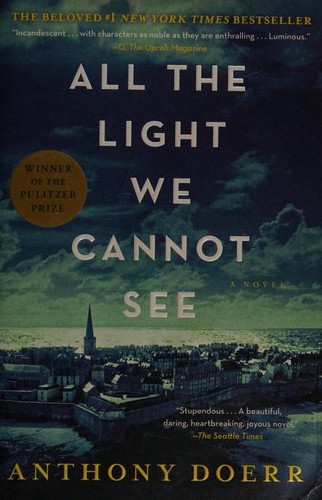
Cover of All the Light We Cannot See

All the Light We Cannot See

Anthony Doerr

4 ideas

  1. Obedience Is Not Innocence

    A person who commits atrocity by following orders or staying silent is still morally implicated, even when the system made dissent costly and rare. Talent and decency do not exempt you; what you choose not to resist becomes part of what you have done.

  2. Radio as Both Liberation and Capture

    The same technology that broadcasts knowledge, music, and connection across distances can be repurposed to hunt, surveil, and triangulate the location of its users. A tool's moral character is not fixed in its design but determined by who controls it and toward what end.

  3. Perceiving the World Without Sight

    When vision is removed, the world reorganizes around sound, texture, scent, and spatial memory, revealing dimensions of reality that sighted people filter out. Mastery comes not from restoring the missing sense but from learning to navigate confidently through the senses that remain.

  4. The Siege of Saint-Malo, August 1944

    In August 1944, as American forces bombard the German-held Breton port of Saint-Malo, the blind teenager Marie-Laure LeBlanc hides alone in her great-uncle Etienne's house at 4 rue Vauborel with the Sea of Flames, a legendary diamond her father smuggled out of Paris's Museum of Natural History, while the gem-hunting German sergeant major Reinhold von Rumpel searches the house for it. Nearby, the eighteen-year-old German radio specialist Werner Pfennig is trapped under the rubble of the Hotel of Bees and, on his receiver, hears her reading Jules Verne's Twenty Thousand Leagues Under the Sea over the attic transmitter. Once free, he finds the house, shoots von Rumpel to save her, and leads her out of the burning city, their only meeting, before he is taken prisoner and dies soon after.
Save and mark ideas in the app