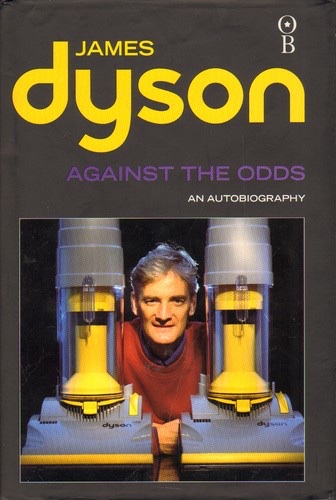
Cover of Against the Odds

Against the Odds

James Dyson

6 ideas

  1. Manufacturers Reject Disruption to Protect Revenue

    Established companies refused to license Dyson's bagless technology because they earned enormous recurring profit from selling replacement bags, making them structurally hostile to an innovation that eliminated that revenue stream. The better a product is for the customer, the more it can threaten the incumbent's business model, which is why disruption usually comes from outsiders.

  2. Engineer as Owner of the Whole Product

    Dyson rejects the separation of design, engineering, and manufacturing into siloed departments, insisting the same person who conceives a product should understand how it is built and sold. Holding the entire chain in one mind prevents the compromises and miscommunications that dilute an original idea as it passes between specialists.

  3. Solve Problems Nobody Else Notices

    Dyson finds opportunity in everyday frustrations that people have stopped questioning — a vacuum losing suction, a wheelbarrow sinking in mud — treating tolerated annoyance as a signal of unmet need. The method is to refuse to accept that something works 'well enough' and to interrogate the assumed constraints behind familiar designs.

  4. Cyclone vacuum from sawmill to DC01

    While running the ball-barrow factory, James Dyson saw an industrial cyclone tower spin powder out of the air. He realised that vacuum-cleaner bags lose suction as dust clogs their pores. Over roughly five years he built 5,127 prototypes of a bagless cyclonic cleaner, first licensed a version in Japan (the G-Force), and in 1993 launched the DC01 under his own manufacturing company after established manufacturers refused the design.

  5. Keep control of patents and company

    Dyson lost the ball-barrow when the patent sat with a company that outside shareholders controlled and they forced him out. He concluded that an inventor who gives up ownership of the intellectual property, or majority control of the business, can be removed from their own invention. That is why he fought costly patent battles and financed his own company with personal debt rather than cede control to licensees or investors.

  6. Iterative prototyping one variable at a time

    Development proceeds by building a prototype, testing it, and changing a single variable before building the next. Each failure isolates what does and does not work. Progress comes from the accumulated empirical record of thousands of small failures, not from a flash of insight, so persistence through repeated failure is the method itself rather than an obstacle to it.

Save and mark ideas in the app