(anti)library
A library that reads itself.
A public window into one reader's library — not the books, but the spines that run across them: the tensions it holds unresolved, the figures it orbits, the collections hiding in plain sight.











Statistics
Everything the engine creates — click any to see them.
Spines · what the library reveals
The patterns pulled forward — tensions it holds unresolved, figures it orbits, depth hiding in plain sight.
Sapolsky argues free will is an incoherent residual category — every behavior traces to biology and prior environment the agent never chose, leaving no causal gap for an uncaused decision. Frankfurt's whole account of love and caring presupposes a will that can be wholehearted or divided, integral or self-defeating — a self that authors its own commitments. They cannot both be right about whether there is anything for a 'will' to do.
With 21 descending books — nearly double the next lineage — Darwin is the collection's strongest intellectual ancestor. The convergence is reinforced by see-also clustering around Sean B. Carroll, Stephen Jay Gould, and 'The Hedgehog, the Fox, and the Magister's Pox.' This is a library where evolutionary thinking is the dominant explanatory frame, spilling well beyond the 87 Science books into Business and Economics reasoning by analogy.
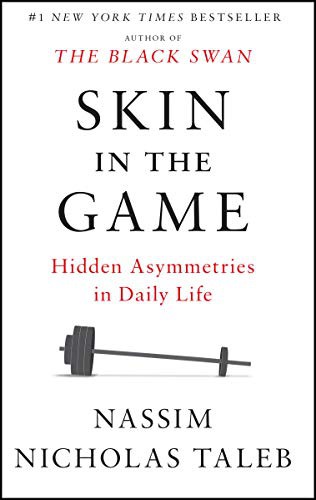
A complete, near-canonical Taleb shelf — every major Incerto volume plus the technical 'Dynamic Hedging' and 'Statistical Consequences of Fat Tails.' The collector didn't just read Taleb popularly; they bought the trader's options manual and the academic fat-tails text, signaling a desire to follow the lineage all the way down to its mathematical machinery, not stop at the airport bestseller.
The owner has assembled the actual dense foundational canon of systems/cybernetics theory — not the popularizations. Cybernetics (Wiener), An Introduction to Cybernetics (Ashby), Steps to an Ecology of Mind (Bateson), and Gödel, Escher, Bach are all marked dense. This is the real primary-source spine of second-order systems thinking, yet the 'systems' register is only 33 books and the accessible systems titles (Thinking in Systems, Emergence, Systemantics) sit on top of it. The owner may not realize they own the hard core, not just the friendly summaries.
Cowen argues compounding economic growth is ethically dominant over almost everything else, dwarfing redistribution and short-term concerns. Smil argues all growth follows S-curves bounded by finite energy and material flows, and that perpetual quantitative expansion is a historical anomaly that contradicts the saturation dynamics governing every physical system. One says maximize growth above all; the other says continued material growth is physically impossible.
10 books trace to Kahneman, and the see-also references to 'Noise: A Flaw in Human Judgment' and 'Groupthink' confirm a behavioral-economics/judgment cluster. This is the intellectual engine behind the large Business (119) and Economics (51) holdings — the owner reads business through the lens of cognitive bias.
Two coherent register-clusters sit at opposite poles and never speak to each other. The empirical pole is dominated by Darwin/Dawkins evolutionary biology and Kahneman-style cognitive science — cold, mechanism-seeking, deflationary about human nature. The contemplative pole is dominated by Patanjali, the Gita, Zen, and yoga — warm, practice-based, transformative about human nature. The same reader holds both 'The Selfish Gene' and 'The Yoga Sutras of Patanjali' with no bridging texts that reconcile mechanism and meaning.
Friedman argues economic freedom precedes political freedom and that government intervention concentrates power dangerously; markets disperse power and discipline themselves. Posner argues capitalism is inherently prone to bubbles and depressions and cannot self-correct in time, making active government stabilization a constitutive part of capitalism rather than an intrusion. A direct clash over whether the market self-regulates or structurally requires the state.
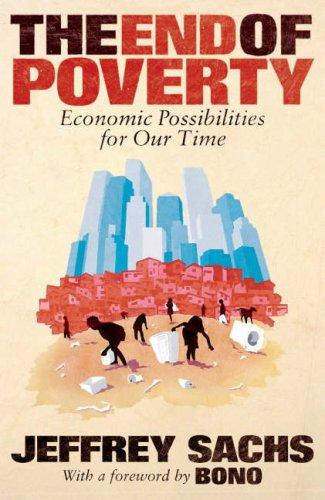
The collection holds both poles of 20th-century economic combat without resolution: Friedman's 'Free to Choose,' Cowen's market libertarianism, the Sovereign-Individual techno-libertarians — against Stiglitz's 'Globalization and Its Discontents,' Krugman's 'Conscience of a Liberal,' Keynes's General Theory and Sachs. The collector reads the argument, not a side.
Beneath the surface 'Business' and 'Science' categories sits an unnamed collection about how groups and individuals systematically misjudge reality. The convergence on Groupthink, Noise, and Epidemiology reveals a coherent preoccupation with the mechanics of flawed human judgment — at both crowd scale and cognitive scale — that no single category captures.
Clusters · collections within the library
Catalogue